Low-End PC, High-End Fun: How Free-to-Play Games Are Rewriting the Rules of PC Gaming
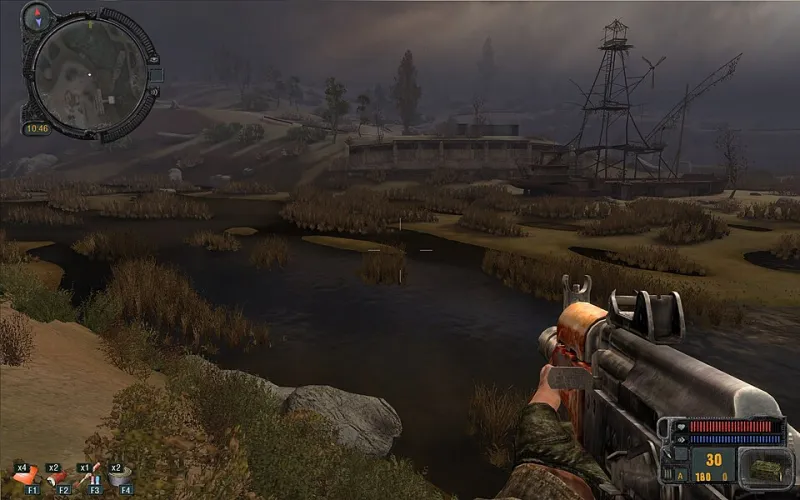
Photo: GSC Game World, GFDL, via Wikimedia Commons
Not long ago, joining the PC gaming world felt like applying for a mortgage. Between graphics cards that cost more than a month's rent and CPUs that required a spreadsheet to understand, the barrier to entry was genuinely brutal. Then GPU prices went haywire, supply chains got weird, and suddenly even mid-range builds felt like a luxury. But something unexpected happened in the middle of all that chaos: free-to-play games quietly became one of the best arguments for owning a PC at all.
And it didn't require a single dollar spent on the games themselves.
The Potato PC Problem Nobody Talks About
Here's a truth most gaming publications skip over — a huge chunk of American households are running machines that would make a PC gaming purist wince. We're talking integrated graphics, 8GB of RAM, and processors that were mid-tier five years ago. For a long time, those specs meant you were basically locked out of modern gaming.
Free-to-play changed that math.
Take Valorant, Riot Games' tactical shooter that's become one of the most-played competitive games in the country. Its minimum specs are almost laughably accessible: an Intel Core i3-370M processor and just 4GB of RAM. That's a machine you could find at a Goodwill for under $100. Yet the game is running 128-tick servers and hosting tournaments with million-dollar prize pools. The gap between what the game demands and what it delivers is genuinely staggering.
Dota 2 is a similar story. Valve has kept its legendary MOBA running smoothly on aging hardware for years, and the game's player base reflects that accessibility. Lost Ark, the Korean action RPG that exploded in the US market, managed to pull in over a million concurrent Steam players at launch while still running on hardware most college students already owned.
These aren't accidents. Developers of free-to-play games have a financial incentive to cast the widest possible net, which means optimizing for machines that paid-title studios wouldn't bother with.
Real Players, Real Stories
Talk to enough players and you'll start hearing the same story with different names attached to it.
Take Marcus, a 24-year-old from Columbus, Ohio, who got into PC gaming through Fortnite on a hand-me-down laptop his older sister left behind. "The thing had a busted hinge and like 6GB of RAM," he says. "I figured it couldn't run anything good. Then I tried Fortnite and it actually worked. Not great, but it worked. I was hooked within a week."
Three years later, Marcus built his own mid-range rig and now plays across a mix of free and paid titles. His entry point? Zero dollars and a game that ran on a machine he already owned.
That pattern — free game leads to hardware investment leads to broader PC gaming adoption — is more common than the industry officially acknowledges. Players discover they like PC gaming through accessible free titles, then gradually upgrade their setups to squeeze more performance out of the games they're already playing.
The GPU Manufacturers' Quiet Secret
Here's where it gets interesting from an industry perspective. Graphics card manufacturers like NVIDIA and AMD have an obvious stake in PC gaming growth, and they've historically leaned hard into the "you need our latest card to play the newest games" narrative. But the F2P ecosystem is actually doing a lot of their recruitment work for them.
When a player starts on a potato PC playing Valorant, they're not staying there forever. They want higher frame rates. They want the settings cranked up. They want the experience to match what they're watching on Twitch. That aspiration is a direct pipeline to GPU sales, and it starts with a free game that cost the player nothing to try.
NVIDIA's own data has repeatedly shown that competitive shooters — many of which are free-to-play — are among the top drivers of GPU upgrade cycles. Players who start on integrated graphics eventually want dedicated cards, and the free game they fell in love with is often what lit that fire.
Which F2P Games Actually Run on Low-End Hardware?
If you're working with a budget machine and want to know where to start, here's a quick rundown of titles that punch well above their spec requirements:
- Valorant — Tactical shooter, runs on nearly anything made after 2010
- Dota 2 — Deep strategy, surprisingly forgiving on older hardware
- League of Legends — Still one of the most-played games in the world for a reason
- Warframe — Third-person action with scalable settings that work on mid-range laptops
- Path of Exile — Dark, complex ARPG that doesn't need a powerhouse to run
- Genshin Impact — Gorgeous open-world game with a PC minimum spec most people already meet
- Apex Legends — Technically a bit heavier, but highly optimizable with the right settings
Each of these titles offers genuine depth. These aren't watered-down experiences designed to hook you before asking for money — they're full games that happen to also be free and happen to also run on hardware you might already own.
The Bigger Picture
The GPU shortage years taught a lot of American gamers something the industry didn't necessarily want them to learn: you don't need bleeding-edge hardware to have a great time. Free-to-play games made that lesson concrete. They gave players something real to play while the hardware market was a dumpster fire, and in doing so, they built an entirely new generation of PC gamers from the ground up.
That's not a small thing. The PC gaming audience has historically been gatekept by cost, complexity, and a culture that sometimes felt hostile to newcomers. Free-to-play titles — especially the well-optimized ones — are dismantling that gate one low-spec laptop at a time.
At Free Games Hub, we've always believed the best game is the one you can actually play. Right now, for a lot of people, that game is free. And the hardware will come later — once you're already hooked.